|
|
|
|
Gordon Lightfoot Gone But Not Forgotten 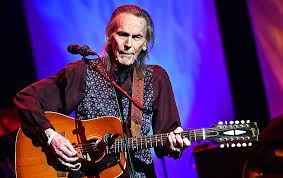 Gordon Lightfoot, hit-making Canadian singer-songwriter, dies at 84 He was hailed for capturing the essence of his native land as a storyteller and memory keeper with songs such as ‘The Wreck of the Edmund Fitzgerald’ Gordon Lightfoot, a Canadian balladeer whose songs of longing, loss and memory made him one of the 1970s most popular recording artists, with hits such as “If You Could Read My Mind,” about his failed marriage, and “The Wreck of the Edmund Fitzgerald,” which recounts a tragic sinking in the Great Lakes, died May 1 in Toronto. He was 84. His publicist, Victoria Lord, confirmed the death but gave no cause. In April, Mr. Lightfoot canceled all his tour dates for this year because of health problems. With a molasses-rich baritone and a soulful 12-string guitar, Mr. Lightfoot found international fame along with others, such as Neil Young, Leonard Cohen and Joni Mitchell, who were emerging from Canadian coffee houses and clubs in the 1960s. Mr. Lightfoot remained close to his roots as a Canadian troubadour, however, often seeking to evoke the grandeur and mystery of the country’s vastness. He embarked on long canoe expeditions into Canada’s hinterlands — “where,” he said, “the rivers run north into the Arctic Ocean” — and tried to convey the feelings of solitude in his work. He said his song “Sundown” (1974) was inspired by the colors of dusk when he was living in a Canadian farmhouse — and was interwoven into a cautionary tale about his onetime girlfriend, the backup singer Cathy Smith, who was convicted in the overdose death of the comedy star John Belushi after she injected him with heroin and cocaine in 1982. Mr. Lightfoot’s expansive “Canadian Railroad Trilogy” (1967) became such a beloved anthem to Canada that it is regularly performed by school choirs. “If there was a Mount Rushmore in Canada, Gordon would be on it,” the Canadian musician Tom Cochrane said in a 2019 documentary about Mr. Lightfoot, “If You Could Read My Mind.” Geddy Lee, the lead singer of the Canadian rock band Rush, called him “our poet laureate.” Mr. Lightfoot faced private struggles, however. Even as he reached the height of his success, he was sinking into alcoholism that shattered his relationships and clouded his creativity. He also had bouts of facial paralysis from the neurological disorder Bell’s palsy. “I created emotional trauma in a whole lot of people,” he said. He said he stopped drinking in 1982 and resumed recording and touring. In 2002, shortly before taking the stage in his hometown of Orillia, Ontario, Mr. Lightfoot collapsed and was near death during a six-week coma because of an aneurysm in his abdominal aorta. He spent two years recovering and returned to the stage and studio, making a total of more than 20 albums. Among those he credited with helping him rebound, he said, was his friend Bob Dylan, who advised him about the “work ethic” needed to turn an idea into a song. It was all about, Mr. Lightfoot said, “just getting the job done.” Mr. Lightfoot was a notable solo performer on Canada’s folk music scene long before he came to attention on the U.S. charts in 1965 with a hit version of his song “Early Morning Rain” by the folk duo Ian & Sylvia. Peter, Paul and Mary followed up with a cover of the song and also with Mr. Lightfoot’s “For Lovin’ Me.” (Mr. Lightfoot thought Elvis Presley’s 1972 cover of “Early Morning Rain” was among the best.) In addition, Marty Robbins hit the top of the Billboard country charts in 1965 with Mr. Lightfoot’s “Ribbon of Darkness.” Beginning in 1970 with “If You Could Read My Mind,” Mr. Lightfoot’s lyrical imagery and warbling, slow-roll vocals became a staple of Top 40 radio for the next six years, including “Sundown,” which reached the top of the Billboard Hot 100 chart, and 1974’s “Carefree Highway,” which he said came from a highway sign for Carefree, Ariz., he glimpsed on a nighttime drive from Flagstaff to Phoenix. A Canadian Broadcasting Corp. interviewer once asked Mr. Lightfoot for the essential playlist to understand his music. At the top, he said, was the 1976 hit “The Wreck of the Edmund Fitzgerald,” perhaps his most distinctive piece, which he wrote after reading an article about the sinking of an iron-ore vessel on Lake Superior during a storm in 1975. All 29 crew members perished. The fate of the doomed ship unfolds like an epic poem from the song’s first lines: “The legend lives on from the Chippewa on down/Of the big lake they call Gitche Gumee.” And to his closing: “Superior, they said, never gives up her dead/When the gales of November come early.” “As he’s singing it, you’re getting the strong sense that not only is one ship going down, but a whole way of life is disappearing,” Robert Everett-Green, a former Toronto Globe and Mail music critic, told NPR. “It’s something kind of dusty and genuine and isolated, and it’s gone.” (The song peaked at No. 2 on the Billboard Hot 100.) Mr. Lightfoot performed more than 2,500 concerts during his career but could be reticent and uneasy when reporters asked for personal insights into his work and legacy. Mr. Lightfoot, who once called himself a “cosmopolitan hick,” had a shyness that could leave people wanting more. An interviewer on Canada’s “Breakfast Television” show tried to coax his thoughts on being considered a “Canadian icon.” He quickly pivoted to talk about nature. During an interview for a 2019 Rolling Stone profile, Mr. Lightfoot said he believed storytelling was at the heart of his success. “They’re all tunes that move along and have a forward momentum,” he said, “which is what I look for in my writing. Forward momentum.” Gordon Meredith Lightfoot Jr. was born in Orillia, Ontario, on Nov. 17, 1938. His father managed a dry-cleaning facility, and his mother was a homemaker. His performing debut was at 5 singing “I’m a Little Teapot” at a church Sunday school gathering. He joined the church choir, was on local radio shows and, at 13, won a talent contest at the Kiwanis Music Festival held at Toronto’s Massey Hall. Mr. Lightfoot studied at Westlake College of Music in Los Angeles and returned to Canada, appearing with a song-and-dance troupe on the CBC-TV show “Country Hoedown,” where he was nicknamed Gord Leadfoot because of his less-than-elegant dancing style. A fellow performer joined Mr. Lightfoot to form a folk duo, the Two Tones, and cut a live album in 1962, “Two Tones at the Village Corner.” Mr. Lightfoot moved to Britain, where he hosted a BBC country music telecast. The surge in folk music with a political edge in the 1960s, led by performers such as Dylan and Tom Paxton, brought Mr. Lightfoot back to the United States. In 1965, he appeared at the Newport Folk Festival in Rhode Island and soon signed with manager Albert Grossman, who also represented Dylan and Peter, Paul and Mary. He recorded his first solo album, “Lightfoot!,” in 1966. He later wrote songs about the 1967 Detroit riots ( “Black Day in July”), whale hunting and pollution — although he said he did not see himself as a protest singer. “I just want to retain my youthful outlook in everything — not grow old, congeal,” he told The Washington Post in 1974. “Stay curious, questioning.” At his home in Toronto, Mr. Lightfoot had a placard saying: Anger can kill you. It was, he said, a reminder of his past abuses with alcohol that brought on mood swings. “I want to stay happy,” he told the CBC in 2019. In March 2020, Mr. Lightfoot released the album “Solo,” which featured Mr. Lightfoot and his guitar. The reviewer Greg Cahill on the music site the Absolute Sound praised its “emotional rawness.” Mr. Lightfoot’s marriages to Brita Olaisson and Elizabeth Moon ended in divorce. Survivors include his wife of nine years, Kim Hasse; two children from his first marriage; two children from his second marriage; two sons from other relationships; and several grandchildren. Mr. Lightfoot described himself as a songwriter always seeking the “perfect poem.” “It’s hard on your mind, and it takes a toll on your nerves,” he told the CBC. “And you obsess over it. You are driven to it.” |
|
Folk songs; vocals and guitars by the composer, with ensemble. 'm not sayin'/Ribbon of darkness -- Song for a winter's night -- Canadian railroad trilogy -- Softly -- For lovin' me/Did she mention my name -- Steel rail blues -- Wherefore and why -- Bitter green -- Early morning rain -- Minstrel of the dawn -- Sundown -- Beautiful -- Summer side of life -- Rainy day people -- Cotton Jenny -- Don Quixote -- Circle of steel -- Old Dan's records -- If you could read my mind -- Cold on the shoulder -- Carefree highway. |
|
|
Painter passing through [sound recording] / Gordon Lightfoot Drifters -- My little love -- Ringneck loon -- I used to be a country singer -- Boathouse -- Much to my surprise -- Painter passing through -- On Yonge Street -- Red velvet -- Uncle toad said. Drifters (3:27) -- My little love (4:08) -- Ringneck loon (4:14) -- I used to be a country singer (3:16) -- Boathouse (4:13) -- Much to my surprise (3:42) -- A painter passing through (3:55) -- On Yonge Street (4:27) -- Red velvet (2:37) -- Uncle Toad said (3:29).
|
|
|
|
Prospect Heights Public Library District
12 N. Elm St.
Prospect Heights, Illinois 60070
847-259-3500
www.phpl.info
|
|
|
|