|
|
 |
Book Arts & Special Collections and San Francisco History Center |
|
| |
|
|
|
|
|
|
|
|
Black Girlhood in the San Francisco Bay Area During the Great Migration
During the Great Migration, more than six million African Americans left the rural South for the North and West. Great Migrants were not only adults, but also children. Using visual storytelling, and original audio and video footage, we hear from Black girls who came of age in the San Francisco Bay Area in their own words about the racialized and gendered social and political context of their childhood, and how it shaped various aspects of their lives, including the children’s educational experiences and extracurricular activities, the neighborhoods they lived in and had access to, their friendships and life chances.
Wednesday, March 4th, 2026: 6:00pm African American Center - 3rd Floor
Main Library 100 Larkin Street aac@sfpl.org |
| Learn more
|
|
|
|
|
|
Through Faith Petric's journey, Singing for Justice shows how committed networks of people sustain resistance to inequality and conformity in America - through speaking up and singing out.
Faith repeatedly found herself on the dramatic frontlines of history. A student peace activist in her twenties, she continued to protest war as a Raging Granny in her eighties. She aided migrant workers in California during the Great Depression, built Liberty Ships during World War II, faced Cold War-era FBI surveillance, and marched for racial justice in Selma, AL.
Told largely by Faith herself, the film draws upon a treasure trove of sources – her extensive life-long collection of photos and artifacts, performance and interview footage across the decades, and insights from historians, musical colleagues, and family members. Historical footage provides a foundational layer to the story, creating a seamless narrative in which Faith was not abstractly affected by world events but chose to actively engage with them.
Singing for Justice explores the personal motivations and historical context behind Faith’s remarkable commitment to creativity and community. The film examines the legacy of her life for those seeking social justice today and empowers audiences of all ages to create music, build intergenerational communities, and engage civically, as Faith did. Please join us for a rare screening about this local activist, followed by a Q & A with the filmmakers.
Saturday, March 14th, 2026: 2:00pm Koret Auditorium - Lower Level
Main Library 100 Larkin Street ArtMusicRec@sfpl.org |
| Learn more
|
|
|
|
|
A monthly social club based in San Francisco for mail artists, letter writers and people who love the USPS. If this sounds like you, then you've come to the right place! The Correspondence Co-op is a place for like-minded folks to meet other artists and beginners in a casual setting, make some mail art and share ideas.
The SFCC meets the third Sunday of every month; no meeting in December. Sponsored by Book Arts & Special Collections.
Sunday, March 15th, 2026: 1:00pm
Learning Studio - 5th Floor Main Library 100 Larkin Street bookarts@sfpl.org |
| Learn more
|
|
|
|
|
|
Come and enjoy a tour of the exhibition led by bookbinder Lang Ingalls.
Patricia Owen (Patty) was an architect who found in bookbinding a medium more directly and immediately open to personal expression. Form and shape were central to Patty’s designs, primarily irregularly shaped, often organic. She explored a myriad of textures and materials. Color was also important. Her bindings are mainly monochromatic and often accented with greens and reds. The bindings in this exhibition reveal Patty’s continual exploration and a mastery of craftsmanship. The exhibition was initiated by fellow members of the bookbinding community who knew Patty and her work and felt that a retrospective would provide an opportunity to view nearly all the bindings she created over 35 years.
Saturday, March 21st, 2026: 2:00pm Skylight Gallery - 6th Floor
Main Library 100 Larkin Street bookarts@sfpl.org |
| Learn more
|
|
|
|
|
|
|
|
|
|
|
|
HERstory: Women's History Month |
|
|
Celebrate amazing women who have shaped the world at the Library during Women’s History Month with programs for all ages as well as recommended reads, watches and listens.
|
|
|
|
|
|
|
Faith Petric, 1987. Image courtesy of Singing for Justice.
Faith Petric—political radical, community organizer and charismatic performer—left an enduring mark on San Francisco’s folk music scene. In 2012, she donated the archives of the San Francisco Folk Music Club (SFFMC) to the San Francisco History Center, preserving decades of music history. Founded in 1948 by Dave Rothkop, the SFFMC was reorganized in 1959 by Herb Jager, and in 1962 Petric took the helm, guiding the club through a period of growth and activism.
In 1964, the club began publishing The Folknik, a bimonthly newsletter that documented performances, politics and community life. Dedicated to the enjoyment, dissemination, and preservation of folk music, the SFFMC brought together singers, instrumentalists, songwriters, dancers and devoted listeners.
Collection includes meeting minutes, newsletters, member directories, correspondence, flyers, and buttons—and is open for research. Join us March 14, 2 p.m., Main Library for a screening of Singing for Justice, the documentary celebrating Faith Petric’s life and legacy.
|
|
|
|
CLIR Barbara Cameron Papers
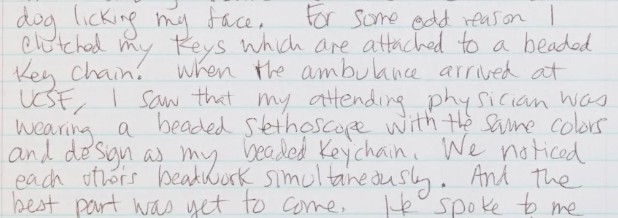
“My Favorite Encounter in the Emergency Room…”
It’s a surprising opening coming from anyone really. But it’s especially so coming from Barbara Cameron, a Lakota writer who wrote “as Native and lesbian, I strongly identify as an outsider to healthcare although I see a doctor at least once a week.”
|
 |
|
|
Intrigued? Well, you’re in luck. The James C. Hormel LGBTQIA Center of the San Francisco Public Library is excited to share that the first batch of the Barbara Cameron Papers is digitized and available through the Internet Archive. It’s part of the digitizing project “Amplifying LGBTQIA+ Activism in Local History Archives” which is funded through a grant from the Council on Library and Information Resources (CLIR).
Barbara Cameron (1954-2002) was a Lakota lesbian writer, speaker, photographer and political activist who lived in San Francisco for most of her adult life. Her papers include her poems and prose, speeches given at various events, correspondence, publications and photographs. This first set of scanned materials for the CLIR grant includes her writings and speeches. Her work often addresses the subjects of rights for lesbians, for women and for Native Americans; race; HIV education; and homophobia.
Her writing often includes reminiscences of her life growing up on the Standing Rock Sioux Reservation in South Dakota, her experience moving between different communities (Native American, lesbian and gay, white, people of color), her feeling of being “other” much of the time, the challenges of being Native and the different ways that racism is exhibited, and felt.
Visibility is also the focus of this CLIR-funded digitizing project. The encounter above is just one of Barbara Cameron’s stories and we’re grateful for the opportunity to amplify her voice and share her stories more widely. We invite you to take some time to visit. The other SFPL James C. Hormel LGBTQIA archival collections to be digitized for this project are the Christopher Hewitt Papers and the Pomo Afro Homos Records. Look for more information as we proceed.
Here are some of the beadwork designs in the Barbara Cameron Papers: |
|
|
|
|
New Arrivals to Book Arts & Special Collections |
|
|
|
|
Gerard Unger: A Life in Letters
Gerard Unger’s body of work presents a case study in the development of modern type design, unfolding alongside the rapid technological changes that have transformed typesetting and publishing during the last fifty years. After an auspicious initiation by making a counter proposal to Wim Crouwels famous New Alphabet (1967), Unger became a principal designer of new typefaces for the first digital type composing machine, the Hell Digiset. |
|
|
|
|
Radical Paper: Art and Invention with Colored Pulp
Authors/artists Lynn Sures and Michelle Samour introduce and expand this incredibly versatile medium to artists, curators, collectors, art historians, and the broader public through personal and technical essays and full-color images that highlight the dynamic scope and inventiveness of today’s leading practitioners. |
|
|
Pirating & Publishing: The Book Trade in the Age of Enlightenment
In the late-18th century, a group of publishers in what historian Robert Darnton calls the "Fertile Crescent" -- countries located along the French border, stretching from Holland to Switzerland -- pirated the works of prominent (and often banned) French writers and distributed them in France, where laws governing piracy were in flux and any notion of "copyright" very much in its infancy. |
|
|
|
Current and Upcoming Exhibits |
|
|
|
Patricia Owen Design Bookbinding
A Retrospective February 6, 2026 - June 4, 2026
Skylight Gallery - 6th Floor |
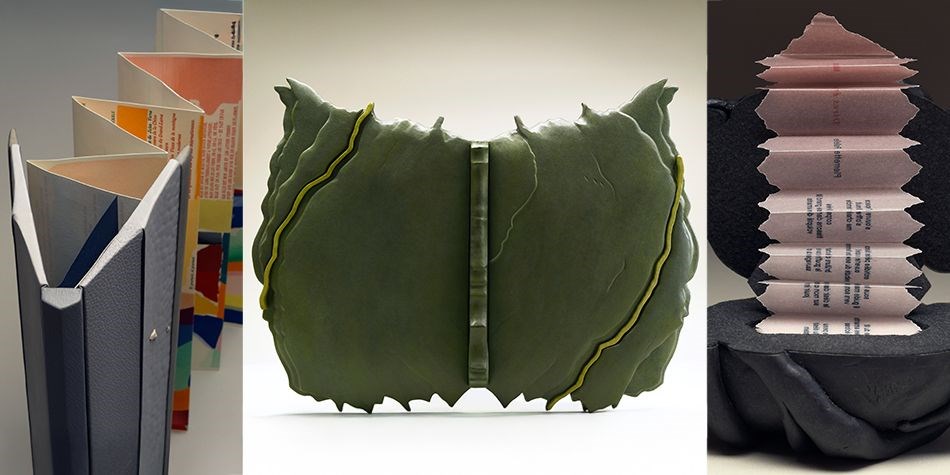 |
Patricia Owen (Patty) was an architect who found in bookbinding a medium more directly and immediately open to personal expression. Form and shape were central to Patty’s designs, primarily irregularly shaped, often organic. She explored a myriad of textures and materials. Color was also important. Her bindings are mainly monochromatic and often accented with greens and reds. The bindings in this exhibition reveal Patty’s continual exploration and a mastery of craftsmanship. The exhibition was initiated by fellow members of the bookbinding community who knew Patty and her work and felt that a retrospective would provide an opportunity to view nearly all the bindings she created over 35 years.
|
| Learn more
|
|
|
|
|
|
Fashioning Bay Area Punk
Style, Subversion, Shock! October 31, 2025 - March 15, 2026
Book Arts & Special Collections Exhibit Space- 6th Floor |
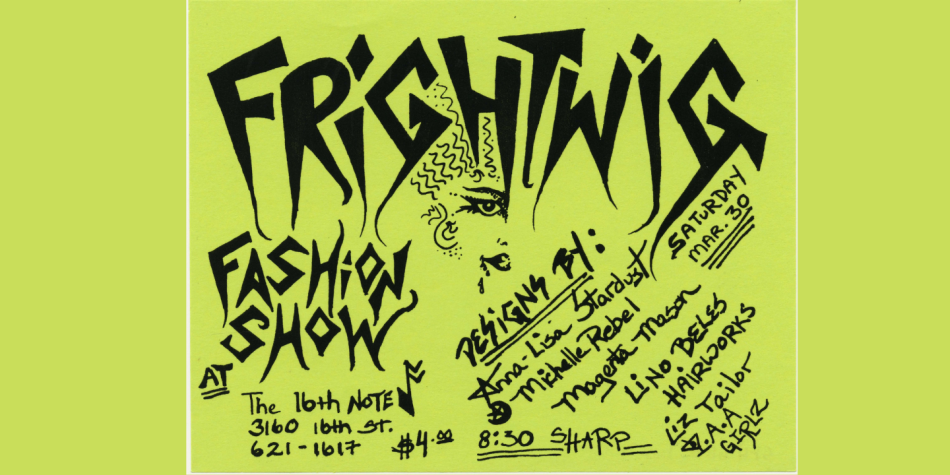 |
As a display, Fashioning San Francisco Punk traces the development of San Francisco punk dress and self-expression to the city’s rich history of counter-cultural revolution and celebrates the looks, accessories, and tastemakers that continue to define Bay Area alternative style.
Explore the library's Punk Rock Archive and Little Maga/Zine collection through this display connecting the content to the exhibition Living Tattoo Traditions: American Irezumi and Beyond, on view in the Jewett Gallery from Oct. 2, 2025 - March 1, 2026. |
| Learn more
|
|
|
|
|
|
Remembering Hobie MacQuarrie, San Francisco Lettering Artist
|
|
|
|
“I say to me I must FLY and I do!”
Original lettering by Hobie MacQuarrie Richard Harrison Collection of Calligraphy & Lettering
We remember beloved San Francisco calligrapher Hobie MacQuarrie (1930-2026) who has left us for the great lettering shop in the sky. Hobie’s interest in lettering arts began in 1947 in a silkscreen/sign shop. He never stopped making and writing letters, becoming an active member of the Friends of Calligraphy and contributing mightily to the triennial members exhibition, KALLIGRAPHIA at the San Francisco Public Library. The San Francisco Public Library is honored to include original work by Hobie MacQuarrie in the Richard Harrison Collection of Calligraphy & Lettering, accessible to everyone.
Pictured here is Hobie’s celebratory quotation taken from cross-country skier Manuela Di Centa, who won five medals at the 1994 Winter Olympics, Lillehammer, Norway.
|
|
|
|
|
San Francisco History Center, Book Arts & Special Collections
Main Library, 6th Floor 100 Larkin San Francisco, CA 94102 |
|
|