Discover what's new this month at your local library!
|
|
|
|
 |
Longform Article Reading Club |
|
| |
|
|
Like a book club, but less commitment
| We had our largest group convene for the David Foster Wallace discussion last month--"Shipping Out" from Harper's (Jan 1996). I've listed a plethora of related articles at the bottom of this newsletter. Thanks for the great discussion!
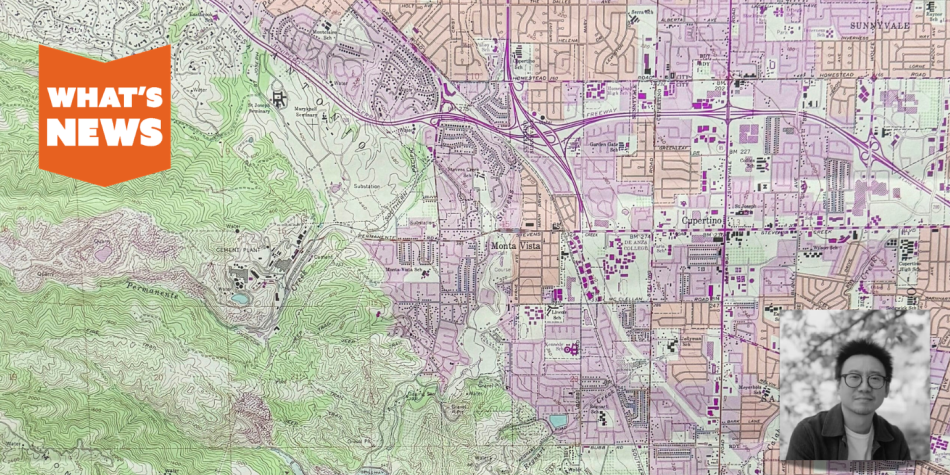
A week from today, on Saturday, Sept. 26, we'll discuss an article that's at once memoir, an exploration of urban development, and an analysis of the cross section of Bay Area transportation planning and regional culture: "Silicon Valley Circuits" by Hua Hsu (Places Journal, July 2026). |
|
| |
|
|
|
The November selection and meeting have been published; take a look because we're meeting earlier in the month than usual due to the Thanksgiving holiday: on the third Saturday, Nov. 21, rather than the last.
Lastly, I'm thrilled to share that our little club will close out the year of longform journalism by meeting face-to-face in December! Our in-person mixer is on Sat. December 12 at the Main Library (Learning Studio, 5th Floor). The agenda includes refreshments, mystery gifts for all attendees, and a discussion of "Joy" by Zadie Smith... plus plenty to time to get to know each other in a more casual setting by doing an informal review of the 11 articles we discussed in 2026. Coffee is served at 10 a.m.!
Until then see you on Zoom. | See you on Sat the 26th! -- Kelci |
 | |
|
September Selection |
 |
|
| Register on Zoom
| Saturday, 9/26/2026
10:00 - 11:30 a.m. Virtual Library (Zoom)
Hua Hsu grew up in Cupertino when Apple was just another company in an anonymous office park—which is to say, before Highway 85 transformed the southern reaches of Silicon Valley. Now, he uses the artery’s arrival to chart the development of the region, his family and himself. With the stories of so many highways being ones of displacement and inequality (see: New York, Chicago, Oakland), it’s a treat to read one that feels more like a memoir of possibility.
Places Journal, July 2026
Access options: Header image courtesy of Places Journal |
October Selection |  |
by Kate Zambreno |
| Register on Zoom
| Saturday, 10/31/2026
10:00 - 11:30 a.m.
Virtual Library (Zoom) (Rescheduled from July 25)
Judging from how Kafka talks about traveling in his diaries, he’s a frail and neurotic man urged by the obsession to write—but in this patchwork essay of tidy squares and literary headings, Zambreno associates him with photography, Paris, Lake Maggiore, art theft and historical occurrences both literally connected to his life and figuratively relevant. Does Kafka get what Kafka complains about wanting? In reconstructing Kafka’s history through her own obsessive research and placing the writer’s process within the essay itself, Zambreno presents a portrait both splintered and replete of the famous Czech author as a young man.
Virginia Quarterly Review, Winter 2019
Access options:
|
November Selection
|  |
by Leslie Marmon Silko |
| Register on Zoom
| Saturday, 11/21/2026
10:00 - 11:30 a.m. Virtual Library (Zoom)
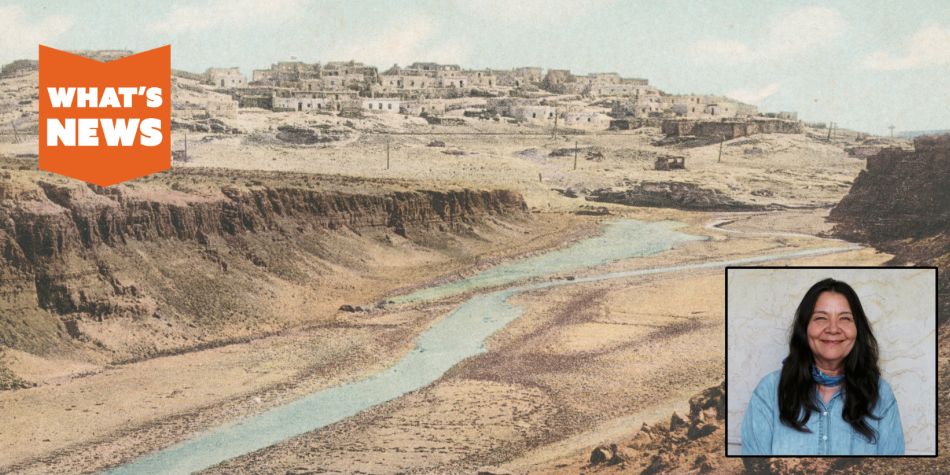
In this essay that went on to become the title piece of her 1996 book, Native American literary giant Leslie Marmon Silko writes about the concept of beauty as held by the old timers of Laguna Pueblo reservation in New Mexico, a concept informed by the mythology of Yellow Woman (Kochininako) and taught to her as a child by her great-grandmother. In sharing these stories and beliefs, she invites us to explore Native ideas of beauty, sturdiness and gender roles that contrast with white, Christian ideals. These beliefs celebrate female sensuality and fertility, peering into the spirit and determination of a person rather than judging their static outward appearance.
Los Angeles Times Sunday Magazine, 19 Dec 1993
Access options: | Recap From Last Meeting
|
We discussed the David Foster Wallace essay "Shipping Out" from Harper's, 1996
This article was about twice as long (or more) as our usual selections, clocking in at just under 20,000 words, and we did a pretty good job of getting into it. At the end of the day we may struggle to ponder what happens when such attention to detail and the ability to scrutinize the character of others is trained on the author himself. The last day or two of his cruise is spent in the solitary confinement of his cabin, glossed over as a success in "surviving" being "pampered to death," continuing the trance he summoned the night before in self-defense against hypnosis:
For me, at the end of a full day of Managed Fun, Nigel Ellery's act is not particularly astounding or side-splitting or entertaining. What it is is weird. There's something crucially key about Luxury Cruises in evidence here: being entertained by someone who clearly dislikes you, and feeling that you deserve that dislike at the same time you resent it. The show's climax has the six subjects all lined up doing syncopated Rockette kicks. Because my own dangerous mesmeric susceptibility makes it important that I not follow Ellery's hypnotic suggestions too closely or get too deeply involved, I find myself, in my plush seat, going farther and farther away, sort of creatively visualizing an epiphanic Frank Conroy-type moment of my own, trying to see the hypnotist and subjects and audience and ship itself with the eyes of someone not aboard, imagining the m.v. Nadir right at this moment, all lit up and steaming north, in the dark, at night, with a strong west wind pulling the moon backward through a skein of clouds--the Nadir a constellation, complexly aglow, angelically white, festive, imperial. Yes, this: it would look like a floating palace to any poor soul out here on the ocean at night, alone in a dinghy, or not even in a dinghy but simply and terribly floating, treading water, out of sight of land. This deep disassociative trance--Nigel Ellery's true unconscious gift to me--lasted all through the next day and night. This period I spent entirely in Cabin 1009, in bed, mostly looking out the spotless porthole, with trays and rinds all around me, feeling a little bit dulled but mostly good--good to be on the Nadir and good to know that soon I would get off the ship, that I had survived (in a way) being pampered to death (in a way)--and so I stayed in bed. And even though the trance made me miss the final night's Talent Show and Midnight Farewell Buffet and Saturday's docking (at which there was apparently even more crepe and waving and explosive goodwill) and a chance to have my After-photo taken with Captain G. Panagiotakis, reentry into the stresses and demands of quotidian landlocked real-world life wasn't nearly as bad as a week of absolutely nothing had led me to fear. (pg. 56)
"Shipping Out," also known as "A Supposedly Fun Thing I'll Never Do Again" in David Foster Wallace's essay collection, seems to have birthed a genre unto itself. Recent essays in the cruise ship pseudo-travel writing genre include:
Harper's published several other essays by DFW and a handful of fictional stories. You can find them referenced on the Harper's website, and then look them up in the library database eLibrary if you hit a paywall on the open web.
I'd be remiss to not include a reference to DFW's posthumously revealed misogyny. I think Becca Rothfeld's take on it is the best commentary to include here.
|
|
|
Thanks for reading!
|
Selections are curated by librarians in the Magazines and Newspapers Center. See all 2026 selections.
We welcome your suggestions! Guidelines:
Around 10,000 words in length Strong sense of plot driving the narrative Any topic or genre Preference given to articles from periodicals the library subscribes to Have questions or comments?
Contact us by phone at (415) 557-4453 or email at mnc@sfpl.org
|
| Sign-up for this Newsletter
|
|
|
Magazines and Newspapers Center Main Library, 5th Floor
100 Larkin Street
San Francisco, CA 94102
sfpl.org/magsnews
|
|
|
|
|
|
|