|
|
 |
|
November 2025 | |
|
 |
Adult Services Notes |
|
|
|
Refresh Your Find It VA Skills
November/December Sessions |
|
|
|
EBSCO Explora
EBSCO’s Explora is a user-friendly search tool that supports both student research and lifelong learners, providing access to a comprehensive collection of full-text general interest articles from periodicals, newspapers, and books. This authoritative general information database is the best place to start your research project.
When: Wednesday 11/12, 1 PM ET
|
| Register |
|
|
Gale Legal Forms
Find downloadable, fillable forms for basic legal transactions, current to Virginia code covering basic legal needs--wills, power of attorney, landlord/tenant, and lots more. Includes a comprehensive section of templates for small businesses including: invoices, leases, sales agreements, contracts, and more.
When: Wednesday 11/19, 1 pm ET
|
| Register |
|
|
Access Video Just for Kids
Help your users find and enjoy great children's programs, including TV shows like Arthur, Sesame Street, Odd Squad, SciGirls, and much more. Access Video Just for Kids also offers read-along storybooks and learning videos to explore topics like reading, writing, math, arts and science.
When: Thursday 12/4, 1 PM ET
|
| Register |
|
|
State Resources to Know
November/December Sessions
|
|
|
The state of Virginia has a wealth of resources that librarians should be aware of, as they offer useful content and support when working with library patrons.
From financial information to small business to health and wellness to the arts, state agencies are there to help residents of the Commonwealth.
Many state agencies are also interested in collaborating with public libraries to better serve Virginians, offering programming opportunities and more. |
|
|
State Corporation Commission
Virginia's State Corporation Commission (SCC) promotes public awareness and education by providing Virginia residents with free resources and tips to conduct research to Invest Wisely. Carmen Clifford, Principal Training and Outreach Coordinator for the Division of Securities and Retail Franchising at the SCC, will provide library staff with tips and resources they can use to help library patrons conduct research before investing and/or hiring an investment professional.
Carefully researching an investment opportunity and the person offering it, as well as any person offering their services as an investment advisor and/or broker dealer, is vital to avoiding falling prey to investment fraud. The SCC is an independent state regulatory agency that oversees many industries in Virginia such as Insurance, Utilities, Railroads, Securities, and more. The Division of Securities and Retail Franchising is a part of the SCC and regulates the securities and franchising industries in Virginia, providing regulatory oversight and public awareness.
When: Tuesday, November 18, 1 pm ET
|
| Register |
|
|
Department of Aging and Rehabilitative Services: No Wrong Door Initiative
The Virginia Easy Access website is your place to Search, Connect and Learn about services, programs and information in your area to support older adults, adults with disabilities, veterans and caregivers. The site offers tools and resources to easily find and connect with services and information, with an emphasis on each person’s unique needs which often span multiple life domains and social determinants of health.
Virginia Easy Access is a core tool of the No Wrong Door Virginia initiative from DARS, in partnership with VirginiaNavigator and 211 Virginia.
Join Val Murphy and Sarah Arnold from VDARS to learn -
How to use the main features, tools and resources available on the Virginia Easy Access website
-
How the 25 local Area Agencies on Aging (AAAs) are key partners providing services and building networks of resources
-
The goals and values of the No Wrong Door Virginia initiative
When: Tuesday, December 2, 1 pm ET |
| Register |
|
|
Virginia Open Data Portal
Join staff from the Virginia Office of Data Governance and Analytics to explore the Virginia Open Data Portal: a gateway to public government data for Virginia.
Librarians work with all sorts of patrons, researchers, journalists, students, advocates, or curious citizens, and this session will equip you with the skills to help them effectively use Virginia's comprehensive data resources.
The Virginia Open Data Portal is the largest state Open Data Portal, hosting over 19,000 local, state, and federal datasets and it is constantly growing! Virginia librarians are encouraged to both utilize and share the platform with library patrons across the Commonwealth.
You will learn how to
-
Navigate the Virginia Open Data Portal with confidence and efficiency
-
Search, filter, and access datasets across state agencies and programs
-
Create engaging story pages and data visualizations directly on the platform
-
Transform raw data into compelling narratives that inform and engage your audience" When: Tuesday, December 16, 1 pm ET |
| Register |
|
|
|
In case you missed these recent LVA trainings, here are the links to the recordings in Niche Academy:
State Resources to Know Series
Refreshing Your Find It VA Skills |
|
|
Niche Academy is open to all Virginia library staff members and library associates such as trustees and Friends board members. If you do not have a Niche Academy account, please use your library email address to sign up. If you do not have a library work email, you may register with a personal email, and we will contact you to confirm that you are affiliated with a Virginia library.
|
|
|
News from Library Development
|
|
|
RUSA Online Training Reports |
|
|
In partnership with ALA's Reference and User Services Association, the Library Deveopment Division is delighted to offer training opportunities for Virginia library staff.
Scholarship recipients are asked to report out on key points or topics. Read the most recent report below. |
|
|
| Patron Response Framework: Responding with Kindness, Empathy, and Love in Difficult Situations
Cassandra, Jefferson-Madison Regional Library
Patron Response Framework covered how best to handle patron interactions during difficult settings using mindful techniques. The Plan, Evaluate and Implement objectives set a roadmap on how to organize and execute respectful patron interactions during these scenarios.
LEARN, CARDS, EBBS and FLOWS provide a framework on evaluating a situation with a color coded guide and easy to remember acronyms. This system is an effective model establishing a smooth, efficient and kind exchange with patrons.
Providing space for patrons to be heard as well as applying safe boundaries when circumstances call for it. I found the acronyms and color coded guide to be very helpful in remembering how best to handle these interactions. I believe this system can easily be incorporated into my library system’s training and customer service committee. |
|
|
| Patron Response Framework Responding with Kindness, Empathy, and Love in Difficult Situations
Victoria Hauser, Henrico County Public Library
The course on Patron Response Framework was a one hour webinar presented by Shelley Roossien, Accessibility & Inclusion Specialist of the Kent District Library in Michigan. Ms. Roossien provided an overview of how the library district built the framework and training program for staff. The framework provides “guidelines to help staff through difficult interactions and situations while working with the public.” She explained their project planning and evaluation, including navigating through phases of pandemic, and how other library systems might also begin this process to be customized to their own needs.
Ms. Roossien then reviewed the frameworks which categorized interactions as code Green, Yellow, or Red, and included Code Follow-up. She shared specific steps, staff training workbooks, and training videos that illustrated different scenarios with patrons.
Overall, the webinar was very accessible and easy to follow. The presenter’s passion for supporting and preparing library staff and helping patrons was very evident. While designing a framework and training for your own library system would be large endeavor, there were many insights gained from the Kent District process.
|
|
|
|
|
|
Next year will mark America’s commemoration of the 250th anniversary of our nation’s founding. The Library of Virginia has compiled some of our favorite primary source documents from our collections to help teach students about the American Revolution. Get started on our Teach VA250 page.
|
|
|
Readers' Advisory Tips and Tricks
|
|
|
NoveList Plus Curated Lists |
|
|
Even the best readers' advisors sometimes can get stuck. Maybe you need to create a quick booklist or display, have a question about a genre that you don't follow closely, or you're working reader seeking suggestions for an author or title that you're not familiar with.
NoveList's Curated Lists can be a great place to start finding ideas. |
|
|
Curated Lists are collections of titles grouped around a topic, theme, or pop culture trend. The lists are compiled by librarians, not algorithms, and contain anywhere from 15-25 or so titles. There are almost 300 curated lists for readers of all ages, and you can use the filter tool to limit your view by audience.
Some of the best lists for displays and booklists are the For Fans of ... lists, that pull together titles around streaming shows and movies, classic titles, and even pop culture trends. Search DE For Fans Of to find all the Fans of lists to review.
You can find the Curated Lists collections in the lefthand menu of any NoveList plus page. And you can choose the "All curated lists" link there to see the complete list of lists.
In response to user feedback, NoveList is making improvements to the Curated Lists collection, including these items from a recent NoveList blog post:
- More “For Fans Of” lists: Nearly double the number we had before! Some will be brand new, and some will be beloved favorites from our archives. Get excited for new lists such as For Fans of K-Pop and For Fans of Labubu.
- More context about lists: We’ll be adding descriptions that tell you who curated each list and why it’s special.
- Better browsing of lists: We heard you loud and clear about wanting fewer clicks and easier navigation to lists. We’ve got ideas and are working on solutions!
|
|
|
Virginia Library Projects
|
|
|
Mary Riley Styles PL Staff Book Club
|
|
|
From the editor: This feature in the newsletter allows us to share interesting projects that Virginia libraries are implementing to improve access to resources, build staff cohesion, or improve services. If you are interested in sharing a project your library is doing, please reach out to Barry Trott, barry.trott@lva.virginia.gov, to discuss writing it up.
In this issue, we are delighted to share a piece on how staff book clubs build a sense of community and strengthen staff book knowledge at the Mary Riley Styles Public Library in Falls Church (the editor's childhood library). |
|
|
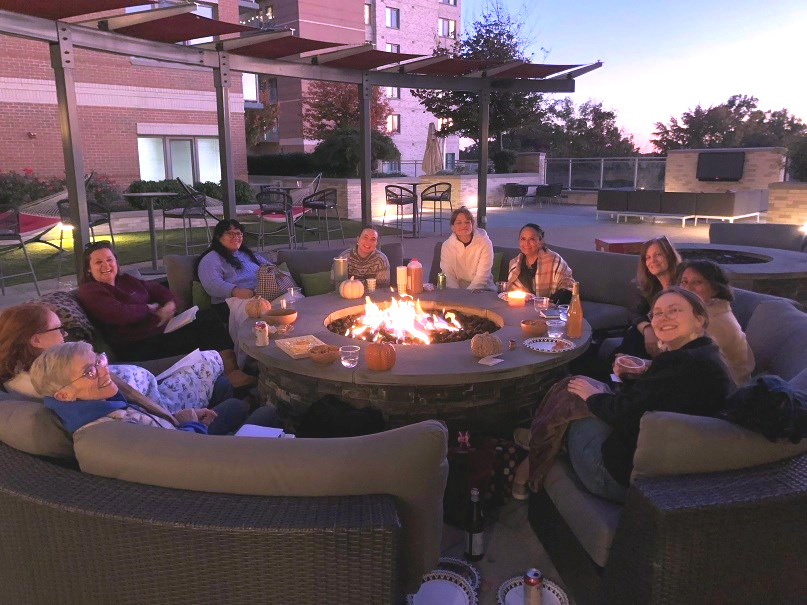
Mary Riley Styles Public Library offers a variety of book clubs for its patrons. In 2024, the library started a new, internal book club for staff: The Library Book Club or “TLC” Staff Book Club.
|
|
|
Early on in my life as a Foreign Service spouse, I discovered that starting a book club when I arrived at a new post was a quick way to do two essential things -- learn about an unfamiliar environment by reading in to the literature of the region, and build a sense of community. When I started working at Mary Riley Styles a few years ago, I thought that starting a staff book group might do those same things in my new workplace, too.
|
|
|
Our optional, recreational, after-work hours club launched in January 2024. As an initial organizing principle, we focused our reading on our common terrain of libraries. Our first read was The Library Book by Susan Orleans, and then we went on to books related to or set in libraries, including What You Are Looking For Is in the Library by Michiko Aoyama and Why We Read: On Bookworms, Libraries, and Just One More Page Before Lights Out by Shannon Reed. The group meets monthly either in a staff member’s home or in a café near the library. The chance to relax and socialize with co-workers over a shared love of reading has been great for staff cohesion and morale; it’s also just plain been a lot of fun. The club is open to retired staff as well, and it’s proven a wonderful way to keep in touch with former colleagues.
|
|
|
In 2025, we decided to expand things by selecting a book from a different genre or format every month. As our motto states, we are “reading our way around the library.” We started with graphic novels and have gone on to explore various types of fiction (romance, mystery, literary translation) and subjects in non-fiction.
This has encouraged all of us to read outside of our preferred genre comfort zones. Also, each month one member presents a short talk about the upcoming genre to provide us with context for the next month’s book. This has had the added professional benefit of making us able to offer better-informed readers’ advisory to our patrons. |
|
|
At the beginning of the year, we put up posters in the staff room for people to write title suggestions under genre headings; every month we choose which title to read next based on availability and consensus. To source the books, we turn to library book club kits, or choose books that are widely available in area libraries and/or in e- or e-audio format. A shelf in the staff room holds the growing collection of books we’ve read so that anyone who misses a meeting but might want to read the book can easily browse through or borrow a copy.
We are looking forward to continuing to read together and are talking about how the club might evolve. For now, we are going to keep exploring different genres, but we’re also thinking about eventually opening things up further to “read our way around the world” by selecting works from different regions and perhaps combining a fiction and non-fiction read each month. Whatever direction our reading takes, the TLC meetings are helping us feel grounded in our library collection, connected with one another, and inspired to keep reading – while building our ability to assist patrons in finding satisfying reads, too!
For more information, contact Paula Hawkins, phawkins@fallschurchva.gov |
|
|
|
Resilient Communities:
Advancing Sustainability in and through Libraries |
|
|
The Resilient Communities project will "inform public library workers about the principles and practices of sustainable librarianship and empower them to begin taking action in their own communities."
This project is a collaboration between ALA and the Sustainable Libraries Initiative. |
|
|
According to the project website, "One-hundred public library workers will be selected to complete “Sustainable Librarianship: Core Competencies and Practices,” a four-part asynchronous e-course. In addition to free tuition for the course, participants will engage in a community of practice with advisors and peers over the course of six months."
The application deadline is 11/14/2025
|
|
|
|
|
Make Your Own Silhouette Portraits
|
|
|
As part of Archives Month 2025 celebrations, Library of Virginia local records archivist Ella Swain put together a fun and creative program on making silhouettes that could be easily brought into the public library.
The art of creating silhouettes began in the 18th century and flourished in the19th century. A program of this sort would be a great addition to an event around Regency romances, Bridgerton, or Jane Austen or as a stand-alone craft project.
Use the button below to download a flyer that has a supply list, detailed instructions, and tips to get the best results from your silhouette projects.
Contact Ella Swain, ella.swain@lva.virginia.gov, if you have questions.
|
|
|
|
Featured Virginia Programs
|
|
|
|
|
|
Salem Public Library is helping patrons explore creativity and elevate their doodling skills with zentangle art. In just a few easy steps, anyone can create entrancing images. Here's how:
-
Gather your materials: zentangle tiles (4in x 4in sheets of paper), HB sketching pencil, archival ink pens in various nib sizes (005, 01, 02, 03, 08), a graphic pen (size 1) and stencils or other objects (optional) for drawing shapes.
-
If desiring a border, make dots in the four corners with a sketching pencil.
-
Connect your four dots to draw the border (or omit if zentangles are to cover the entire tile).
-
Draw the strings that create the areas for the tangles (or use stencils or other objects to draw intersecting shapes).
-
Sketch and then ink tangles - use a different tangle every time you cross a line.
-
For ideas, refer to the Zentangle Gallery in books about Zentangles such as Joy of Zentangle by Suzanne McNeill (ISBN 9781574214277 or create zentangles from your imagination. Sketch the zentangle pattern in one area, then use pens with the smaller nibs to ink smaller areas or fine details, use the larger nibs for outlining or inking larger shapes and use the graphic pen to fill in solid areas.
-
Sign and date your work. Reflect and appreciate your work! |
|
|
For more info, contact Theresa Baga, tabaga@salemva.gov
|
|
|
|
|
Recent articles on topics of interest to Adult Services |
|
|
|
This newsletter is made possible by a grant from the U.S. Institute of Museum and Library Services. It is published by the Library of Virginia Library Development Division.
|
|
|
|
|